Scoping & user flow
Start with the workflow before deciding what screens or technology are needed.
Understand the job before shaping the tool.Apps & software
Custom web and mobile applications, SaaS products and internal business tools for workflows that have outgrown generic off-the-shelf software.
Direct technical ownership
The person helping shape the system is also involved in building it.
From first sketch to release
Good software should remove friction from a real workflow rather than add another system people have to fight.
Start with the workflow before deciding what screens or technology are needed.
Understand the job before shaping the tool.Interfaces should feel immediate, understandable and easy to use for the people doing the actual work.
Make the next useful action clear.Customer records, application state, subscriptions, payments and integrations need to work consistently behind the interface.
Keep the important details connected.Choose hosting and infrastructure that fits the product instead of adding complexity for its own sake.
Enough structure to support what matters.Built from experience
Tazmo Labs builds and operates its own software products alongside commercial web work. That product experience brings a deeper understanding of flows, data, edge cases and what has to keep working after launch.
HoodHero is software built for independent mechanics and garages, bringing appointments, customers, vehicles, job cards, quotes, invoices, approvals, payments and workshop workflows into one system.
View HoodHero ↗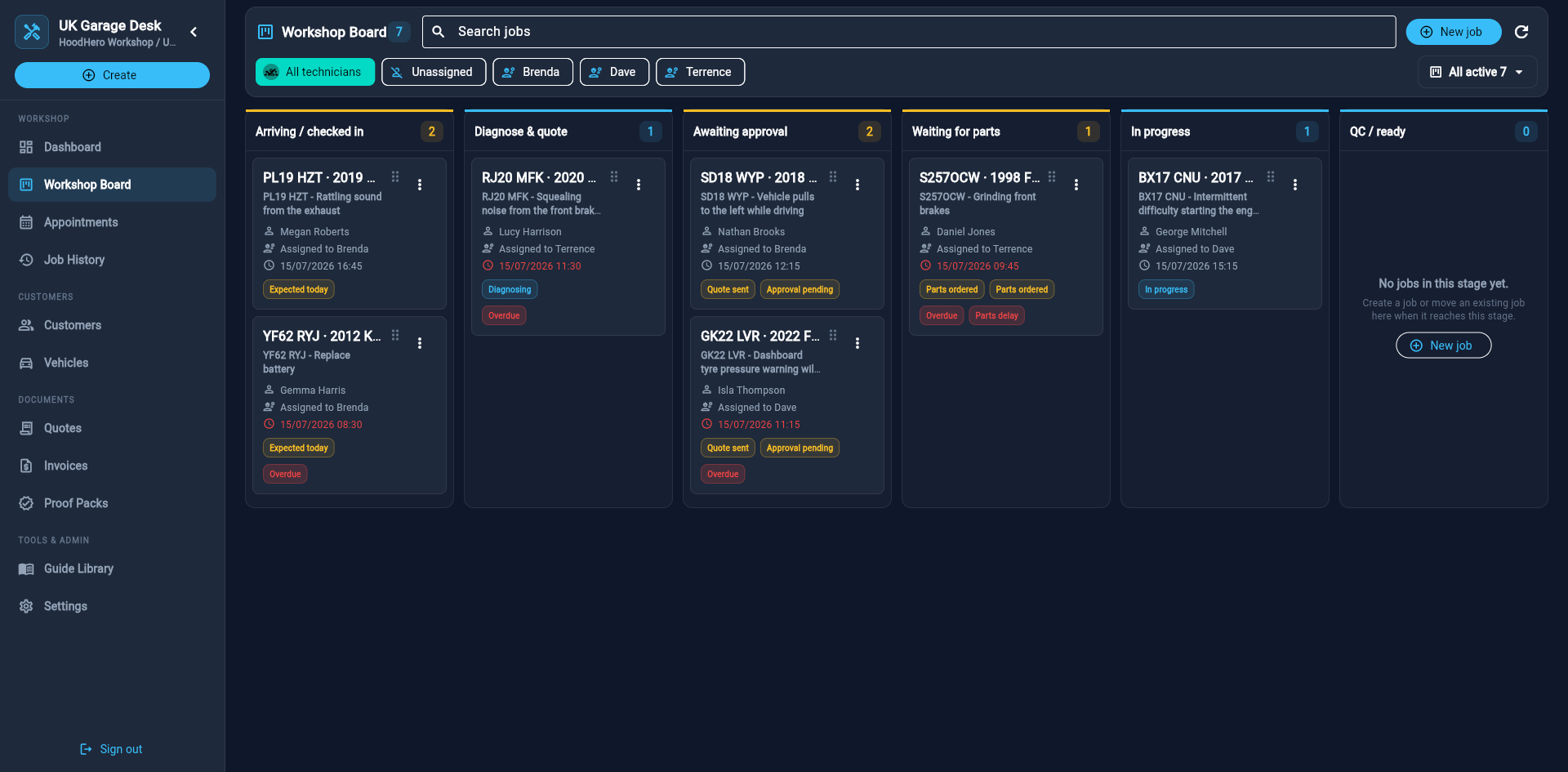

A voice-led Polish learning app built around speaking practice, conversations, vocabulary, grammar and progression.
A calm productivity app for capturing tasks and running focus sessions without turning productivity into another source of pressure.
Projects can include customer portals, internal dashboards, booking workflows and operational tools where a standard website is not enough.
Choose the useful shape
Custom software is not automatically better. It is worth considering when the operational value of a better-fitting workflow justifies the initial investment.
Often the right choice when the workflow is standard and the features already fit.
Consider it when the way the business works is specific enough that standard tools create real friction.
Custom software requires more initial investment. It only makes sense where the operational value justifies it.
“When off-the-shelf software forces a team into clumsy workarounds, building the right custom tool can become the simpler option.”
A clear route from workflow to release
Work through the important decisions early, then keep the build close to the problem it is meant to solve.
Define the problem, users, priorities, data and integrations before committing to the build.
Work through the important screens, interactions and decisions before unnecessary complexity is added.
Develop the product in working stages, test real workflows and refine the areas that matter.
Deploy carefully, handle the necessary production setup and keep the path open for sensible improvements.
Have an idea?
Start with the problem. The right technical shape can come afterwards. Tell me what the workflow needs to do, who needs to use it and where the current friction sits.